
Planning a Shoreline Addition? Start With a Property Survey
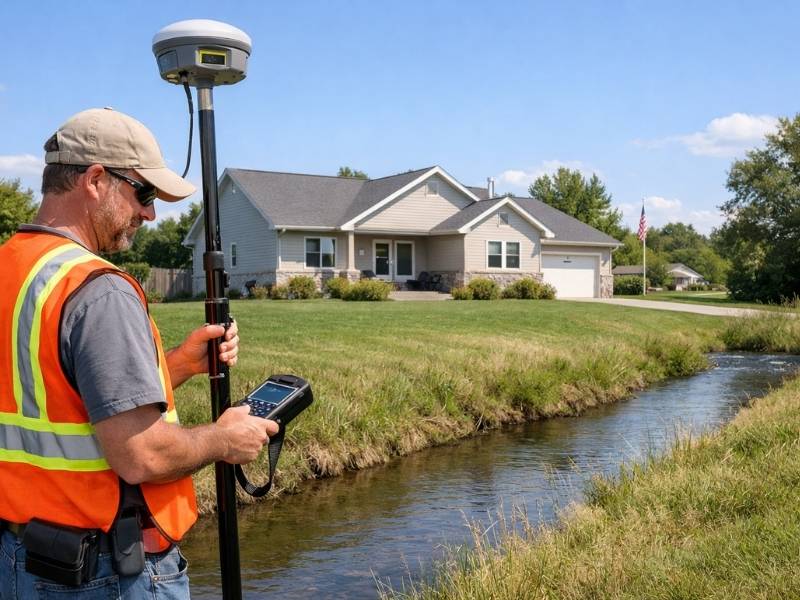
Building a structure next to the water requires matching strict local rules with shifting physical dirt. You might want to build a new boat dock, a stable retaining wall or an expanded lakefront patio. If you guess where your lot ends, you risk fines from local water authorities and forced demolition costs. Planning a shoreline addition? Start with a property survey to ensure your project stays legal, secure and within your actual land boundaries.
Local boards and water management agencies track the space where water meets dry land very closely. A certified map provides the exact dimensions your design team needs to secure structural permits.
Locating Shifting Water Boundaries
Water levels change throughout the year due to seasonal rain and dam management. The line where the lake sits today is rarely the actual legal edge of your lot. An expert must find specific markers to set the baseline for your construction plans.
The surveyor looks for the mean high water line or a specific elevation contour. This line marks the highest point the water usually reaches under normal conditions. Local building departments use this line to measure your building setbacks. If you place a foundation too close to this mark, you violate local preservation rules.
Clear Shoreline Addition Rules
Building near water forces you to work with several government layers. You must satisfy county inspectors, state conservation offices and any federal groups managing local waterways. Each group has specific limits on how close you can build to the wet mud.
A professional map highlights these restricted areas clearly. It gives your layout team an exact boundary for placing materials.
- Filing building plans without a legal map leads to automatic project rejections.
- Most water boards require a minimum setback distance for permanent concrete structures.
- Overlooking shared drainage spots can cause heavy erosion that ruins your new foundation.
- Local inspectors use official maps to check your project before signing off on final permits.
Identifying Public and Private Utility Zones
Shorelines often serve as paths for municipal infrastructure. Water lines, power cables and stormwater drains frequently pass through waterfront lots.
Mapping Buried Utility Lines
Underground lines can sit right where you want to dig out a retaining wall. The mapping specialist notes these paths on your master layout sheet. This prevents your excavation crew from cutting active power feeds or cracking sewer pipes.
Respecting Public Access Easements
Some waterfront parcels include old legal agreements that let the public or city workers cross the dirt. Your design cannot block these pathways. A clear map shows these zones so you can design your walls and docks around them.
Measuring Elevation and Slope Changes
Waterfront lots often drop off steeply as they approach the bank. This uneven ground impacts how water moves across your project site during heavy storms.
A topographic map tracks these elevation drops using precise contour lines. Your engineers use this data to calculate how much soil your crew needs to move. It also helps them design stable foundations that will not slide toward the water when the ground gets soaked.
Establishing Property Corners Away From Water
Land markers near the water often wash away during major floods. To find your true edges, a crew must locate stable pins farther inland.
The field team starts at a known city street monument or an undisturbed neighborhood pin. They measure toward the water from that solid point. This math allows them to reset missing pins along your wet boundaries with high accuracy. This step protects your project from boundary complaints from nearby owners.
Securing Environmental and Building Permits
Water protection agencies will not let you alter banks without seeing detailed site layouts. They want to see exactly how your dock or wall will impact the natural flow of the water.
A certified map gives these agencies the exact proof they require. It shows that your addition stays within your legal limits. It also proves your construction avoids protected wetlands and sensitive vegetation zones. Presenting a professional map speeds up your agency approvals.
Final Project Verification
Before your construction crew pours any concrete or drives any pilings into the shoreline, verify that your field markers are intact. Wind, waves, and foot traffic can displace the bright stakes placed by your mapping specialist. Walk the line with your site supervisor to ensure everyone understands the exact building limits. Keeping your project firmly within these legal boundaries guarantees a smooth, legal, and permanent addition to your waterfront property.
