
Your Builder Will Ask for a Construction Survey. Here Is What That Means.
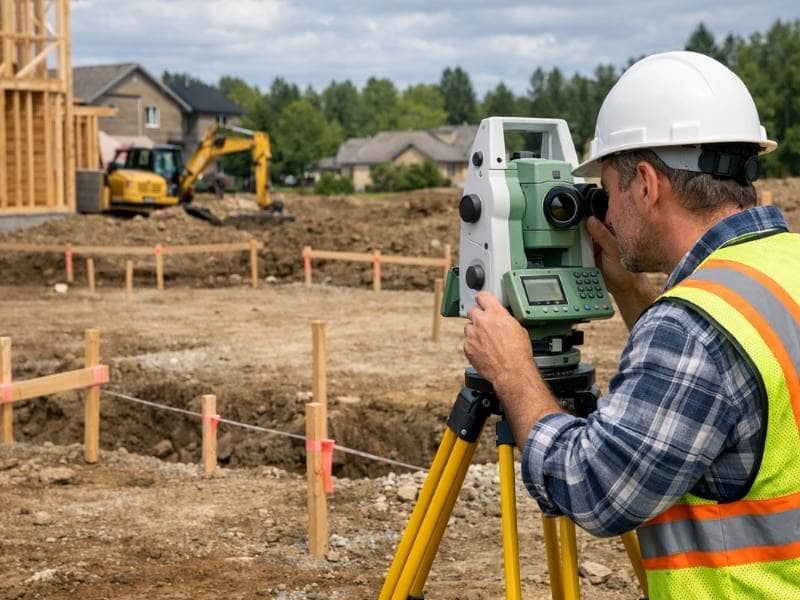
You have found your lot, hired your architect, and chosen your builder. Things are moving in the right direction. Then your builder mentions they need a construction survey before work can begin. If you are not sure what that means or why it matters, you are not alone. Most people hear this term for the first time at this exact moment in the building process.
Here is everything you need to know.
What Is a Construction Survey?
A construction survey is a service performed by a licensed land surveyor that takes the plans on paper and marks them out on the actual ground. It is sometimes called a construction stakeout or a staking survey. All three names mean the same thing.
When your architect designs a building, everything exists on a drawing. The foundation goes here. The driveway starts there. The utility connections land at this point. A construction survey takes all of those measurements and marks them physically on your property using stakes, flags, and markers. Your builder then uses those marks to build in exactly the right spot.
Without a construction survey, your builder would essentially be guessing where to put things. On a construction project, guessing leads to expensive mistakes.
Why Does Your Builder Need One?
Builders need a construction survey to know exactly where to place a structure on a property. It makes sure the building is positioned correctly according to the approved plans, stays within legal setback requirements, and does not accidentally cross property lines or encroach on easements.
Here is what can go wrong without one.
A building placed even a few feet in the wrong direction can violate local setback rules. Setbacks are the minimum distances required between a structure and a property line. Breaking those rules can result in fines, forced changes to the building, or in serious cases, tearing down part of the structure.
A misplaced foundation can also cross onto a neighbor’s property or land inside an easement area. Fixing either of those problems after concrete has already been poured is not a simple or cheap process.
According to the National Society of Professional Surveyors, construction placement errors caused by missing or inaccurate staking are among the most common and costly mistakes in both home and commercial building projects.
What Does a Construction Survey Include?
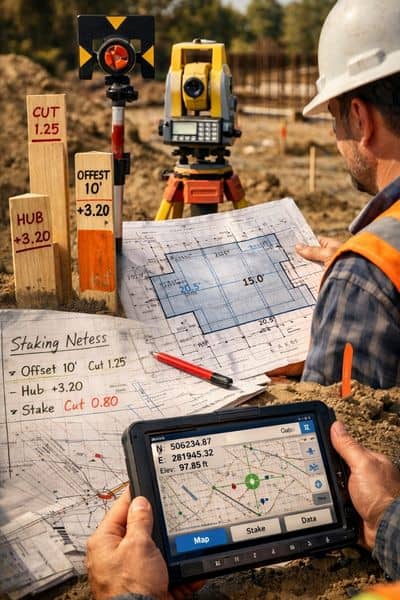
The scope of a construction survey depends on the size of the project. For a typical home build, it will generally cover the following.
- Staking the corners of the building footprint directly on the ground
- Marking setback lines from property boundaries as required by local zoning rules
- Locating and marking easements that could affect where the building goes
- Setting elevation benchmarks so the builder knows the correct height for the foundation
- Staking the location of driveways, utilities, and other features shown on the plans
- Providing a final check once construction is done to confirm everything was built as designed
Each stake and marker serves as a physical guide that keeps every phase of construction lined up with the approved plans.
When Does a Construction Survey Happen?
A construction survey happens in stages throughout the building process. The first stage takes place before any ground is broken. Additional surveys may follow at the foundation, framing, and completion stages depending on what the project requires.
A construction survey is not always a single visit. Larger projects may require the surveyor to come back at different points during construction.
Before the ground is broken. The surveyor stakes the building corners and key site features so the builder knows exactly where to dig and where to place everything.
At the foundation stage. The surveyor may return to check that the foundation forms are in the right position before concrete is poured. This is one of the most important checkpoints in the entire build.
During site work. More staking may be needed for utilities, drainage structures, or roads as the project moves forward.
At project completion. A final survey documents exactly where everything was built. This is often required by lenders, permit offices, and future buyers.
How Is a Construction Survey Different From Other Surveys?
It helps to understand how a construction survey fits in with the other surveys involved in a building project.
A boundary survey shows your property lines. It tells you where your land starts and ends. This is usually done first.
A topographic survey maps the shape of your land, including elevation changes, drainage patterns, and existing features. This is done before design work begins.
A construction survey takes the finished design and marks it on the ground so your builder knows exactly where to build.
Think of it this way. The boundary survey tells you what you own. The topographic survey tells you what it looks like. The construction survey tells your builder exactly where to put everything.
What Happens If You Skip the Construction Survey?
Some builders on smaller projects may suggest skipping the construction survey to cut costs. This is a shortcut that rarely works out well.
Here is what can happen if you skip it.
- A building placed too close to a property line may fail the final inspection and need expensive changes
- Foundation mistakes discovered after concrete is poured can cost tens of thousands of dollars to fix
- Building on a neighbor’s property by accident can lead to legal disputes that delay everything and cost far more than the survey would have
- Many counties will not issue a certificate of occupancy without proof that the building was placed correctly
The cost of a construction survey is small compared to any one of these problems. Most residential construction surveys in the United States cost between 500 and 1,500 dollars depending on the size and complexity of the project.
How Long Does a Construction Survey Take?
For a standard home lot, a construction survey can usually be finished in one day. Larger projects or sites with difficult terrain may take longer. Your surveyor will give you a clear timeline when you schedule the work.
It is always a good idea to book your construction survey well ahead of your planned start date. Surveyors are often scheduled several weeks out, and a delay at this stage can push back your entire construction timeline.
Frequently Asked Questions
Who orders the construction survey, the builder or the property owner?
Either party can place the order, but it is ultimately the property owner’s responsibility to make sure it gets done. Many builders will coordinate directly with a surveyor, but always confirm who is handling this before construction begins.
Does every construction project require a survey?
Most local governments require some form of staking or survey documentation before issuing a building permit or a certificate of occupancy. Check with your local building department to find out what is required in your area.
Can the same surveyor who did my boundary survey also do my construction survey?
Yes, and in most cases this is the most efficient choice. A surveyor who already knows your property can complete the construction survey faster and more accurately than starting fresh with someone new.
What is an as-built survey?
An as-built survey is done after construction is finished. It documents exactly where everything was built compared to the original approved plans. Lenders, insurance companies, and future buyers often need this document before a sale or refinancing can move forward.
